Electricity bills of ₹3000, ₹5000, ₹7000 and even more during summer have become common in many Indian homes. Rising power costs are making homeowners, creators, and businesses look seriously at solar energy. Even today, many people hesitate because of myths and misunderstandings about solar power systems.
The reality is that solar technology has improved dramatically over the years. Costs have reduced, efficiency has improved, and government support has made rooftop solar more practical and accessible for Indian households. Still, many myths continue to create confusion.
Here are some of the most common solar myths in India and the truth behind them.
Myth 1: Solar does not work in cold or cloudy places
Many people think solar panels only work in extreme heat or direct sunlight. This is not true. Solar panels work almost anywhere there is daylight. Even cloudy countries like Germany use large amounts of solar power successfully.
Solar panels continue generating electricity during cloudy weather, rain, and winter. Output may reduce slightly, but generation does not stop. Panels can still produce around 10% to 25% of their normal output on cloudy days because they also capture diffuse sunlight.
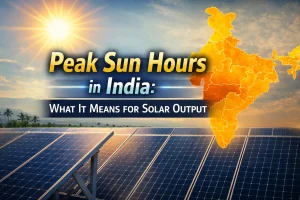
In a country like India, where most regions receive sunlight for nearly 300 days a year, solar is a reliable energy solution.
Myth 2: Rooftop solar is too expensive
This is one of the biggest myths in India. Many people believe installing rooftop solar requires a huge investment of ₹2 to ₹3 lakh and is difficult to afford.
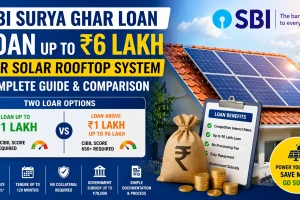
But solar prices have dropped drastically over the last decade. Government subsidies further reduce installation costs. Under the PM Surya Ghar Muft Bijli Yojana, homeowners installing 3 kW or larger rooftop solar systems can receive subsidies up to ₹78,000 from the central government.
Several state governments also provide additional support. Delhi, Assam, and Uttar Pradesh are among the states offering extra subsidies to encourage solar adoption.
Financing options are also available. Government banks provide loans for rooftop solar systems at relatively low interest rates, making installations easier for middle-class families.
Most importantly, rooftop solar is not just an expense. It is an investment. A properly designed system can recover its cost in around 3 to 7 years and then continue generating electricity for 20 to 25 years with very low operating costs.
Myth 3: Solar is only for rich people
Many people assume solar systems are only meant for villas, luxury homes, or wealthy families. Today, that is no longer true.
Solar has become practical and accessible for middle-class households as well. If a home has a monthly electricity bill of ₹1500 or more, rooftop solar can significantly reduce electricity expenses. In many cases, bills can reduce by up to 90%.
Community solar projects, leasing models, loans, and subsidies are making solar adoption possible even for lower-income households.
Myth 4: Solar stops working after sunset
Solar panels generate electricity during the daytime, but that does not mean your home becomes powerless at night.
Homes connected to the grid continue receiving electricity after sunset. Excess solar energy generated during the day can also offset nighttime usage through net metering. Hybrid systems with battery backup can provide power even during power cuts.
Solar energy can also charge electric vehicles during the day for later use.
Myth 5: Solar panels absorb all sunlight and harm agriculture
This is false. Solar panels convert only around 20% of sunlight into electricity. Most sunlight is reflected or passes through. Solar installations generally have minimal impact on nearby gardens or farming.
In many cases, solar panels and agriculture can coexist successfully.
Myth 6: Solar panel manufacturing creates huge toxic waste
A common misconception is that solar panels are highly toxic. In reality, more than 95% of solar panel materials, including glass and silicon, are reusable and non-toxic.
Proper recycling systems can safely handle the remaining electronic waste.
Myth 7: Solar farms require huge amounts of land
People often think solar power needs massive land areas. In reality, rooftop spaces, parking lots, warehouses, and unused land can all be utilized for solar generation.
Large-scale solar is actually highly efficient in terms of energy produced per acre.
Myth 8: Solar manufacturing consumes too much energy
Solar systems usually recover the energy used in their manufacturing within 1 to 4 years. After that, they continue producing clean electricity for 25 years or more.
This makes solar one of the most efficient long-term clean energy technologies available today.
Myth 9: Solar only works because of subsidies
Solar costs have fallen so much that in many regions solar power is now cheaper than electricity generated from coal or gas, even without subsidies.
Government support helps accelerate adoption, but solar itself has already become economically viable.
Myth 10: Solar power is unreliable because it is intermittent
Modern forecasting systems, grid coordination, battery storage, and better distribution networks have significantly reduced intermittency concerns.
A properly designed solar system can reliably support household loads including ACs, geysers, water pumps, refrigerators, televisions, laptops, and EV chargers.
Myth 11: Solar cannot power an entire house
This is another major misconception. If the system is designed properly based on past electricity usage and future needs, solar can handle the complete load of a home. Hybrid systems with batteries can also support essential appliances during power cuts.
Myth 12: Solar panels need direct sunlight to work
Solar panels do not depend only on direct sunlight. They also work using diffuse sunlight available during cloudy or hazy conditions. Panel positioning and system design are often more important than constant direct sunlight.
Myth 13: Rooftop solar makes the power grid unstable
Proper engineering and modern smart inverters help maintain grid stability. In many cases, solar systems actually support voltage stabilization.
Myth 14: Solar is harmful to birds and wildlife
Studies show solar farms generally cause far fewer bird deaths compared to buildings, vehicles, and power lines. Responsible solar development can coexist with wildlife conservation.
Myth 15: Failed solar panels become toxic waste
Even after years of usage, most panel materials remain recyclable. Proper recycling systems can recover glass, aluminum, and silicon for reuse.
Myth 16: Batteries are mandatory for solar systems
Batteries are useful, especially during power cuts, but they are not essential for all solar systems. Grid-connected systems can operate effectively without batteries using net metering arrangements.
Myth 17: Solar will never become a major energy source
Solar energy is already contributing significantly to electricity generation across many parts of the world. Its share continues to grow rapidly because installation is faster and more scalable than many traditional energy sources.
Myth 18: Solar panels lose efficiency very quickly
All technologies experience some degradation over time, but quality solar panels usually lose less than 1% efficiency per year. Even after 25 years, many panels continue operating at more than 80% efficiency.
Myth 19: Solar systems require zero maintenance
Solar systems are low-maintenance, but not maintenance-free. Panels need periodic cleaning and occasional inspections to maintain optimal performance. Just like servicing a bike, car, or air conditioner, basic maintenance helps improve long-term efficiency and reliability.
Myth 20: It is better to wait because solar will become cheaper later
This is often the costliest mistake. Every month spent delaying solar installation means continued spending on high electricity bills. At the same time, government subsidy schemes may not remain available forever or may have limited coverage.
Instead of waiting endlessly for future price reductions, many homeowners can start saving immediately by switching to solar now.
The Reality About Solar in India
Solar power has become more affordable, efficient, and practical than ever before. Many myths still prevent people from adopting it, even though it can reduce dependence on the grid, lower electricity bills, and provide long-term financial savings.
Whether you are a homeowner, business owner, content creator, or someone simply tired of rising electricity bills, understanding the facts about solar can help you make a better decision.
The biggest obstacle today is often not technology or affordability, but misinformation.